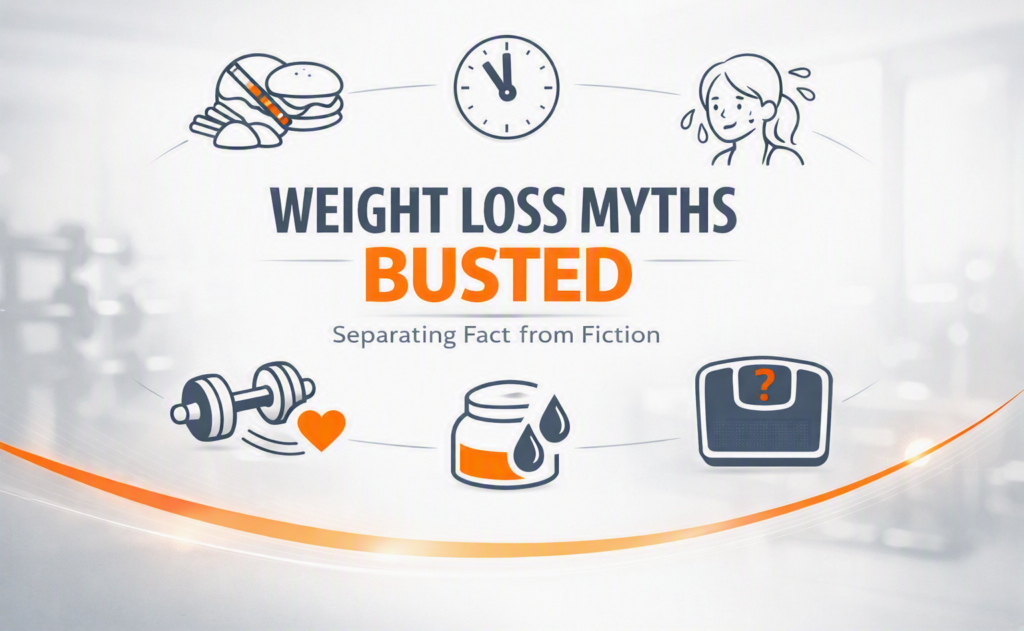
Weight Loss Myths Busted – Separating Fact from Fiction
Trying to lose weight can feel like navigating a minefield of advice, trends, and “magic hacks.” Friends mean well, influencers want clicks, and fad diets want your money. But most of what you hear is either oversimplified or flat‑out wrong.
Let’s cut through the noise and break down the biggest myths holding people back.
Myth 1: You Have to Cut Out Carbs
Carbs get blamed for everything, but they’re not inherently the problem. Whole-grains, potatoes, fruit, veg — they provide fibre, vitamins, minerals, and energy your body actually needs. For most people, weight gain comes from consistently eating more calories than they burn. Not from eating carbs.
But here’s the nuance most posts ignore:
If you’re insulin resistant or diabetic, carbs hit differently. Your body doesn’t handle carbohydrates as efficiently, which can lead to:
- Higher blood sugar spikes
- More insulin released
- Bigger energy crashes
- Increased hunger
- Harder fat loss
You can still lose weight while eating carbs, but the type, amount, and timing matter far more.
The truth: Carbs aren’t the enemy. But if you’re insulin resistant or diabetic, moderating them and choosing slower‑digesting sources can make fat loss easier.
Myth 2: Eating Late at Night Makes You Fat
Your body doesn’t switch into “fat‑storing mode” after 7 p.m. Fat storage doesn’t run on a clock your body burns calories 24/7, whether you’re awake, asleep, or working a night shift. Eating later in the day doesn’t magically turn food into fat. Your body will digest and use that food exactly the same way it does at 10 a.m. People often gain weight from late‑night eating because they:
- Snack mindlessly
- Eat out of boredom or stress
- Under eat during the day and over eat at night
Not because the time itself causes fat gain. As long as you’re still in a calorie deficit, you won’t gain weight regardless of when you eat.
The truth: Meal timing doesn’t cause fat gain. Total daily calories do.
Myth 3: Fat Burns Fat (and “Your Body Needs Carbs” Is False)
Some diets claim you should eat unlimited fat because it “burns fat”, and others claim your body needs carbs to function. Both are wrong. The truth is your body can run on carbs or fat, both are fuel sources.
- Carbs are metabolised faster, making them great for high intensity training and quick energy.
- Fat provides slower, steadier energy, ideal for lower intensity activity and long duration fuel.
And despite what you may hear online: Your body does NOT need carbs to survive. If carbs are low, your body naturally switches to:
- Burning stored fat
- ‘Using dietary fat
- Producing ketones
- Converting protein into glucose when needed
Healthy fats are important, but they’re also the most calorie‑dense macronutrient, which makes them easy to overeat.
The truth: Carbs aren’t essential, fat doesn’t magically burn fat, and portion sizes still matter. Fat loss comes from a calorie deficit — not from eating unlimited fat.
Myth 4: You Must Exercise to Lose Weight
You don’t need to exercise to lose weight.
If you’re in a calorie deficit, you will lose weight whether you exercise or not. Slimming World and WW say the same, and they’re right.
But here’s the part they don’t explain properly, exercise doesn’t cause weight loss but it protects your body while you lose weight.
When you’re in a calorie deficit, your body needs extra energy. If you’re not resistance training and not eating enough protein, your body will use muscle tissue as fuel.
That leads to:
- Muscle loss
- Strength loss
- Slower metabolism
- Poorer body composition
- Easier weight regain
This is why people who lose weight without resistance training often end up “smaller but softer”, weaker, and with a lower metabolic rate. Resistance training changes everything.
It signals to your body:
- “Keep this muscle, I’m using it.”
- “Burn fat instead.”
And when you combine resistance training with adequate protein, you:
- Maintain muscle
- Keep your metabolism higher
- Stay stronger
- Look better as you loose weight
- Avoid th “skinny but weak” outcome
Exercise doesn’t create weight loss, nutrition does. But resistance training protects your muscle while you lose weight.
The truth: You don’t need exercise to lose weight, but you do need resistance training and protein to avoid losing muscle in the process.
Myth 5: More Sweat Means More Fat Loss
Sweating is simply your body’s cooling system, not a fat‑burning mechanism.
A sweaty session might make the scale drop temporarily, but that’s mostly water, not fat. As soon as you rehydrate, the weight returns. People can get confused as high‑intensity workouts often produce more sweat, and they also burn more calories. So people assume the sweat is the fat leaving their body. It’s not.
Sweat is:
- Water
- Electrolytes
- Heat regulation
Fat Loss is:
- Stored fat broken down
- Converted into energy
- Released as carbon dioxide through breathing
You literally breathe out most of the fat you lose, not sweat it out. Sweat can be a sign of effort, but not fat loss. Some people sweat more due to genetics. Some sweat less. It has nothing to do with how much fat you’re burning.
The truth: Sweat shows your body is cooling itself. Fat loss comes from burning more calories than you consume, not from how drenched your T‑shirt is.
Myth 6: Detox Teas and Juice Cleanses Burn Fat
Detox teas, skinny coffees, juice cleanses, they’re marketed as fat‑melting miracles. But none of them detox your body or burn fat.
Your body already has a detox system:
- Liver
- Kidneys
- Digestive system
- Skin
- Lymphatic system
These organs work 24/7. No tea or juice can “boost” them. The reason why detox products seem to work, and create rapid weight loss is:
- Water loss
- Glycogen depletion
- Extremely low calories
- Temporary digestive emptying
Not fat loss and because they’re unsustainable, people often regain the weight quickly, sometimes with more fat and less muscle.
The real problem is detox products distract people from the habits that actually work:
- Consistent nutrition
- Calorie awareness
- Protein intake
- Movement
- Sleep
- Stress management
The truth: Detox products don’t burn fat. They create short‑term water loss and long‑term disappointment.
Myth 8: The Scale Is the Best Measure of Progress
The scale is one tool, not the only tool. Your weight fluctuates daily due to:
- Hydration
- Sodium intake
- Hormones
- Stress
- Digestion
- Training intensity
- Sleep quality
You can be losing fat while the scale stays the same or even goes up. Why? Because of body composition changes:
- You may gain muscle while loosing fat
- You may retain water after training
- You may store more glycogen after eating carbs
- You might weigh more simply because you ate later
There are better indicators of progress that include:
- Waist measurements
- Progress photos
- Clothing fit
- Strength improvements
- Energy levels
- Fitness gains
These show what the scale can’t: fat loss, muscle retention, and improved health.
The truth: The scale is one data point. Real progress is multi‑layered.
Myth 9: Fat Can Be Turned Into Muscle
Fat and muscle are completely different tissues. One cannot transform into the other.
What actually happens, when people “tone up”, they’re doing two things:
1. Losing fat through a calorie deficit
2. Building or maintaining muscle through resistance training and protein
This creates a tighter, leaner, more defined look. But fat isn’t becoming muscle. You’re simply changing the ratio of fat to muscle.
Why the myth exists:
People see their body change and assume one tissue turned into another. In reality:
- Fat cells shrink
- Muscle fibres grow
- Strength increases
- Body composition improves
Two separate processes happening at the same time.
The truth: You lose fat and build muscle, but they don’t convert into each other.
Myth 10: Fast Weight Loss Is Always Better
Rapid weight loss feels exciting, but it’s rarely sustainable. Fast weight loss often backfires, extreme diets often involve:
- Very low calories
- Cutting out entire food groups
- Aggressive cardio
- Poor protein intake
- No resistance training
This leads to:
- Muscle loss
- Slower metabolism
- Increased hunger
- Binge restrict cycles
- Quick regain
- Worse body composition
Slow, steady fat loss is more effective because:
- You keep more muscle
- You maintain a higher metabolism
- You build habits you can sustain
- You avoid rebound weight gain
- You improve your relationship with food
- You stay stronger and healthier
The goal isn’t fast weight loss — it’s permanent weight loss.
The truth: Quick fixes create quick rebounds. Sustainable habits create sustainable results.
Key take away
So, What Actually Works?
Long‑term fat loss isn’t about finding the perfect diet, it’s about sticking to the fundamentals:
- Eat mostly whole foods
- Create a manageable calorie deficit
- Prioritise protien
- Stay active
- Strength train
- Sleep well
- Manage stress
- Be consistent
These aren’t flashy — but they work. Every time.
—
Final Thoughts
There’s no magic food, supplement, or workout that melts fat. The people who achieve lasting results aren’t chasing trends, they’re repeating simple habits over weeks, months, and years.
Stop wasting energy on myths, Start building habits you can maintain for life, The results will follow.